
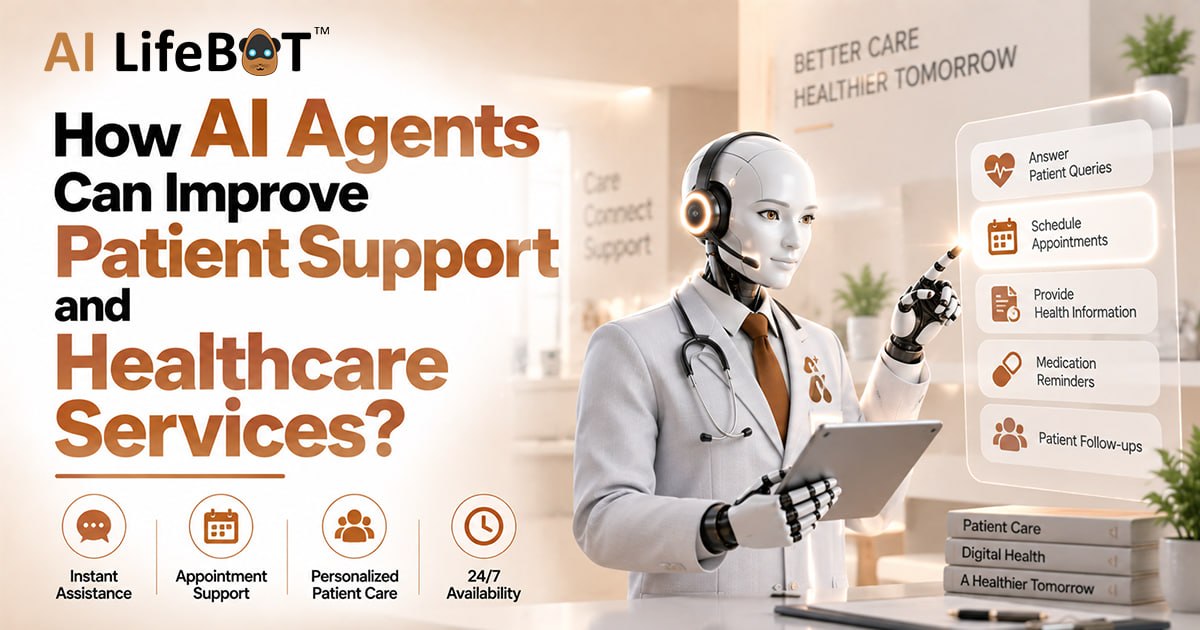
Healthcare doesn't run on appointments alone.
Patients call. They ask questions. They forget instructions. They need reports, appointment confirmations, billing information, directions, follow-ups, and sometimes just a quick answer at 11:30 at night when the clinic reception has already closed.
That's where AI agents can change the experience.
Not by replacing doctors or nurses. That's not the point. The real opportunity is to take care of the repetitive conversations surrounding healthcare, so medical teams can spend more time on the conversations that genuinely require human judgement.
Making Patient Support Faster with AI Agents
Imagine a patient trying to book a consultation. Instead of waiting for someone at the reception desk to answer the phone, an AI agent can handle the initial interaction, understand what the patient needs, collect basic information and guide them towards the appropriate appointment option.
Simple? Yes.
Useful? Very.
This is where AI Agents Customer Service solutions can make a noticeable difference. Patients don't have to navigate a maze of menus or repeatedly explain the same question to different support executives. An AI agent can maintain conversational context and respond according to the information available to it.
And healthcare has plenty of repetitive questions.
“What are the consultation timings?”
“How can I reschedule my appointment?”
“Where can I find my test report?”
“Do I need to carry my previous prescription?”
Those questions don't necessarily require a person every single time.
AI Agents for Contact Centres
Healthcare contact centres can become chaotic quickly. One patient wants to book an appointment while another is asking about a report, a third needs billing assistance, and someone else is trying to reach a particular department.
Phones keep ringing.
Queues grow.
People get frustrated.
AI Agents Contact Center solutions can absorb a significant portion of these routine interactions by handling conversations simultaneously across voice and digital channels.
Instead of forcing every query through the same human queue, AI can identify the nature of the request and handle straightforward tasks automatically—or transfer the conversation to the right human team when the situation requires deeper assistance.
That distinction matters.
AI shouldn't pretend to be a doctor when the patient needs a doctor. It should know when to stop being the first point of contact and bring a human into the conversation.
AI Agent Live Chat Agent for Healthcare Websites
A hospital website shouldn't just sit there displaying information.
Patients have questions.
An AI Agent Live Chat Agent can turn a static healthcare website into an interactive support channel where visitors can ask questions in natural language and receive immediate assistance based on approved information.
Someone searching for a specialist can be guided towards the relevant department. A patient looking for appointment information can receive the next steps. A visitor struggling to find a particular service doesn't have to click through six different pages.
That small reduction in friction can matter.
Especially when someone is already worried.
24/7 Support Without 24/7 Reception Staff
Healthcare doesn't follow neat office hours.
Patients may need assistance early in the morning, late at night, during weekends or on public holidays. Hiring enough people to provide round-the-clock support isn't practical for every healthcare organisation.
An AI-powered Customer Support BOT in Noida, for example, can provide first-level assistance outside traditional working hours while maintaining a consistent experience for patients.
It can answer common questions, collect information, assist with basic requests and escalate more complex cases to the appropriate human team.
No waiting room. No endless hold music.
Just an immediate first response.
The Bigger Opportunity
The most interesting part isn't simply automation. It's what happens when automation removes the boring work.
Healthcare professionals can spend less time answering repetitive administrative questions. Contact-centre teams can focus on complicated conversations. Patients can get information faster. Organisations can handle higher interaction volumes without turning every additional query into another ticket.
That's the real role of AI agents in healthcare.
Not replacing the human touch.
Protecting it.
And with platforms such as AI LifeBOT, healthcare organisations can explore AI-powered customer service, conversational support, live chat and contact-centre automation as part of a broader digital patient-support strategy.